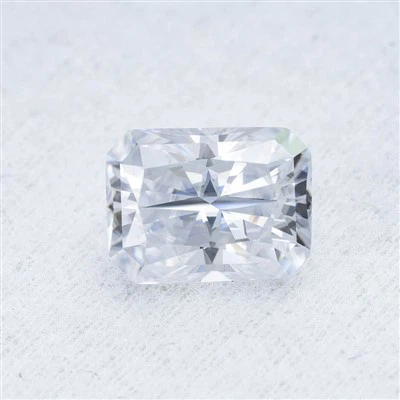
In the ever - evolving world of jewelry, cushion moissanite diamonds have emerged as a popular alternative to traditional diamonds. As a supplier of cushion moissanite diamonds, I often find myself in conversations about the ethics of these beautiful gemstones. In this blog post, I aim to delve deep into the topic and provide a comprehensive analysis of the ethical aspects of cushion moissanite diamonds.
The Origin and Production of Moissanite
Moissanite was first discovered in 1893 by Henri Moissan, a French chemist, in a meteor crater in Arizona. Initially, it was thought to be diamonds due to its high refractive index and brilliance. However, further analysis revealed it to be silicon carbide. Natural moissanite is extremely rare, so the moissanite used in jewelry today is lab - created.
The process of creating lab - grown moissanite involves simulating the high - pressure, high - temperature conditions under which natural moissanite is formed. This is typically done using chemical vapor deposition (CVD) or the Lely method. These are controlled, scientific processes that take place in a laboratory environment.
Compared to diamond mining, which can have significant environmental and social impacts, the production of moissanite is far more sustainable. Diamond mining often involves large - scale earth removal, water pollution, and the displacement of local communities. In contrast, lab - grown moissanite requires far less land, water, and energy. There is no need for large - scale open - pit or underground mining operations, which can cause long - term damage to ecosystems.
Ethical Considerations in the Diamond Industry
The diamond industry has long been plagued by ethical issues. The term "blood diamonds" or "conflict diamonds" refers to diamonds that are mined in war zones and sold to finance armed conflict against governments. In the late 1990s and early 2000s, the world became aware of the role diamonds played in fueling civil wars in countries like Sierra Leone, Angola, and the Democratic Republic of Congo.
To address this issue, the Kimberley Process Certification Scheme (KPCS) was established in 2003. The KPCS aims to ensure that diamond exports are conflict - free by requiring participating countries to certify that their diamond exports are from legitimate sources. However, the KPCS has faced criticism. Some argue that it has loopholes that allow conflict diamonds to still enter the market. Additionally, it only addresses the issue of conflict diamonds and does not cover other ethical concerns such as labor rights, environmental impact, and the exploitation of small - scale miners.
In many diamond - mining regions, workers often face poor working conditions, low wages, and a lack of safety regulations. Children are also sometimes involved in the mining process, which is a clear violation of human rights. Moreover, the environmental damage caused by diamond mining, including deforestation, soil erosion, and water pollution, has long - term consequences for local communities and the planet as a whole.
Ethical Advantages of Cushion Moissanite Diamonds
As a supplier of cushion moissanite diamonds, I am proud to offer a product that has numerous ethical advantages. First and foremost, since moissanite is lab - grown, there is no risk of it being associated with conflict or unethical mining practices. Customers can be assured that when they purchase a cushion moissanite diamond, they are not contributing to any form of armed conflict or human rights abuses.
From an environmental perspective, the production of moissanite is much cleaner and more sustainable. The energy consumption in the lab - creation process is relatively low compared to the energy - intensive nature of diamond mining. Additionally, there is no land degradation or water pollution associated with moissanite production. This makes it an environmentally friendly choice for consumers who are conscious about the impact of their purchases on the planet.
In terms of labor ethics, the production of moissanite in a laboratory setting provides a controlled and safe working environment. Workers in the moissanite production facilities are typically skilled professionals who are paid fair wages and provided with proper safety equipment. There is no exploitation of vulnerable workers, which is often a concern in the diamond mining industry.


Aesthetic and Quality Considerations
Cushion moissanite diamonds are not only ethical but also offer excellent aesthetic and quality features. They have a high refractive index, which gives them a brilliant sparkle that is comparable to, if not better than, natural diamonds. The cushion cut, with its rounded corners and square - to - rectangular shape, is a classic and elegant choice for jewelry.
Moissanite is also very durable, with a hardness of 9.25 on the Mohs scale (compared to 10 for diamonds). This means that it can withstand daily wear and tear, making it suitable for engagement rings and other pieces of jewelry that are worn frequently.
In addition to cushion - cut moissanite, there are also other fancy - cut moissanite options available. For example, you can explore Trillion Moissanite Diamond, Pear Moissanite Diamond, and Heart Moissanite Diamond for more unique and personalized jewelry designs.
Cost - Effectiveness and Accessibility
Another important aspect to consider is the cost - effectiveness of cushion moissanite diamonds. Natural diamonds are often very expensive due to their rarity and the high cost associated with mining, cutting, and polishing. In contrast, moissanite is more affordable. This makes it accessible to a wider range of consumers who may want to purchase high - quality jewelry without breaking the bank.
The affordability of moissanite does not mean a compromise on quality. As mentioned earlier, moissanite offers excellent aesthetic and durability features. It allows consumers to get a beautiful and sparkly gemstone that looks similar to a diamond at a fraction of the cost.
Conclusion and Call to Action
In conclusion, cushion moissanite diamonds are a highly ethical choice in the world of jewelry. They offer a way for consumers to enjoy beautiful gemstones without contributing to the ethical problems associated with the diamond industry. From environmental sustainability to labor ethics, moissanite has a clear advantage over mined diamonds.
If you are in the market for jewelry and are looking for an ethical, beautiful, and cost - effective option, cushion moissanite diamonds are a great choice. Whether you are a jewelry retailer looking to expand your product line or an individual consumer searching for the perfect piece, I encourage you to consider our cushion moissanite diamonds. I am more than happy to engage in a purchase negotiation. Reach out to me, and let's find the ideal cushion moissanite diamonds for your needs.
References
- "The History of Moissanite." Jewelry Insights.
- "Ethical Issues in the Diamond Industry." International Gem Society.
- "Sustainability in Gemstone Production." Gemological Institute of America.