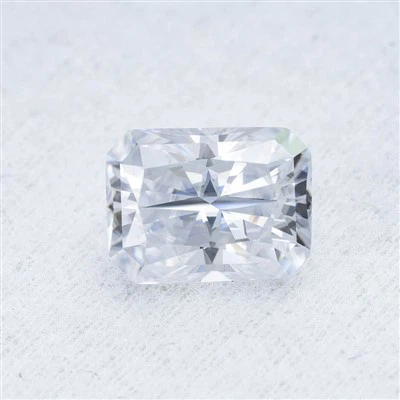
As a longtime supplier of Asscher Moissanite Diamonds, I've witnessed firsthand the unique charm and scientific intrigue that different moissanite cuts bring to the table. Among the various options available, the Asscher cut stands out due to its distinct light performance. In this blog, I'll delve into the differences between Asscher cut moissanite and other moissanite cuts in terms of how they interact with light.
Understanding Moissanite and Its Cuts
Moissanite is a remarkable gemstone known for its exceptional brilliance and fire. It has a high refractive index, which means it can bend and reflect light in ways that create a dazzling display. The way a moissanite is cut plays a crucial role in determining how it will perform when it comes to light. Different cuts are designed to enhance specific optical properties, and the Asscher cut is no exception.
The Asscher Cut: A Classic with a Modern Twist
The Asscher cut was first introduced in the early 20th century by the Asscher brothers. It is a square or rectangular cut with cropped corners and a stepped facet pattern. This cut is often compared to the emerald cut, but it has more facets, which gives it a unique look.
One of the key features of the Asscher cut moissanite is its ability to create a "hall of mirrors" effect. When light enters the stone, it bounces off the multiple facets, creating a series of reflections that seem to go on infinitely. This effect is particularly noticeable when the stone is viewed from the top. The Asscher cut also has a high degree of symmetry, which helps to distribute light evenly throughout the stone.
In terms of brilliance, the Asscher cut moissanite offers a more understated, elegant sparkle compared to some other cuts. It doesn't have the same explosive fire as a round brilliant cut, but it makes up for it with its sophisticated and refined appearance. The light that is reflected from the Asscher cut is more controlled and focused, creating a more subtle yet captivating display.
Comparing with Other Moissanite Cuts
Round Brilliant Cut
The round brilliant cut is perhaps the most well - known and popular cut for diamonds and moissanite alike. It is designed to maximize brilliance and fire. With 58 facets (including the culet), the round brilliant cut allows light to enter the stone from various angles and reflect back out, creating a very bright and sparkly appearance.


In contrast to the Asscher cut, the round brilliant cut has a more intense and dispersed fire. The light that exits the stone is broken up into a rainbow of colors, creating a dynamic and eye - catching display. However, this high degree of fire can sometimes make the stone look a bit overwhelming or less refined compared to the Asscher cut.
The Asscher cut, on the other hand, has a more focused and directional light reflection. It emphasizes the clarity and symmetry of the stone, making it a great choice for those who prefer a more classic and sophisticated look.
Trillion Moissanite Diamond
The trillion cut is a triangular - shaped cut with pointed or rounded corners. This cut is known for its modern and contemporary look. Trillion cut moissanite typically has fewer facets compared to the Asscher cut, which can result in a different light performance.
Trillion cut moissanite often has a strong concentration of light at the tips of the triangle. This creates a very distinct and bold look, with a sharp, defined sparkle. The light reflection in a trillion cut is more concentrated in specific areas, while the Asscher cut distributes light more evenly across its surface.
The Asscher cut's stepped facets give it a more refined and structured appearance, whereas the trillion cut has a more edgy and avant - garde feel when it comes to light performance.
Marquise Moissanite Diamond
The marquise cut is an elongated oval shape with pointed ends. It is known for its ability to make the stone appear larger than it actually is. Marquise cut moissanite has a unique light pattern due to its shape.
Light tends to be concentrated along the length of the stone, creating a long, luminous streak. The marquise cut has a very graceful and elegant light performance, but it is different from the Asscher cut. The Asscher cut's square or rectangular shape creates a more balanced and stable light reflection, while the marquise cut's elongated shape results in a more linear and flowing light display.
Cushion Moissanite Diamond
The cushion cut is a square or rectangular cut with rounded corners, giving it a soft and pillow - like appearance. It has a combination of large, open facets and smaller, more intricate ones.
Cushion cut moissanite has a warm and inviting light performance. The large facets allow a good amount of light to enter the stone, creating a bright and cozy sparkle. In comparison, the Asscher cut's more numerous and smaller stepped facets result in a more precise and controlled light reflection. The cushion cut may have a bit more diffused light, while the Asscher cut offers a more focused and structured display.
Factors Affecting Light Performance in Different Cuts
There are several factors that can affect how different moissanite cuts perform in terms of light. These include the number of facets, the angle of the facets, the shape of the stone, and the quality of the polish.
The number of facets directly impacts how much light can be reflected and refracted within the stone. More facets generally allow for more light interaction, but it also depends on how those facets are arranged.
The angle of the facets is crucial. If the angles are too shallow, light may escape through the sides or bottom of the stone, reducing its brilliance. On the other hand, if the angles are too steep, light may not enter the stone effectively.
The shape of the stone also plays a role. Different shapes will distribute light in different ways, as we've seen with the comparison of various cuts.
Finally, the quality of the polish affects how smooth the surface of the facets is. A well - polished stone will reflect light more efficiently, enhancing its overall light performance.
Choosing the Right Cut Based on Light Performance
When it comes to choosing between an Asscher cut moissanite and other cuts, personal preference plays a major role. If you're someone who appreciates a classic, sophisticated look with a more controlled and refined light display, the Asscher cut may be the perfect choice for you.
On the other hand, if you love a bold and dynamic sparkle, with fire that seems to burst out of the stone, a round brilliant cut or a trillion cut might be more appealing. Those who prefer a graceful and elongated light pattern may opt for a marquise cut, while those looking for a warm and cozy sparkle might choose a cushion cut.
Contact for Procurement Discussion
If you're interested in learning more about Asscher Cut Moissanite Diamonds or other moissanite cuts and exploring potential procurement opportunities, I'd be more than happy to engage in a discussion. Whether you're a jeweler looking to add high - quality moissanite to your collection or an individual seeking the perfect gemstone for a special piece of jewelry, don't hesitate to reach out.
References
- "The Art of Gem Cutting" by John Sinkankas
- "Gemology: An Introduction" by Robert Weldon