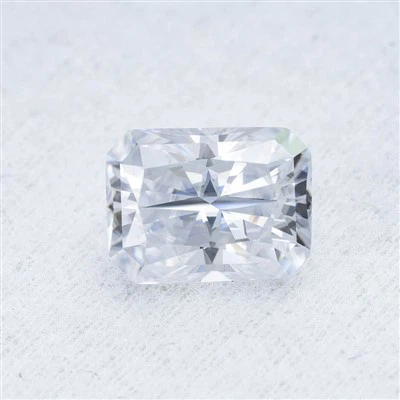
Hey there, gemstone enthusiasts! I'm a supplier of fancy cut moissanites, and today I want to dig into a question that often pops up: Are fancy cut moissanites more prone to chipping?
First off, let's talk a bit about moissanite itself. Moissanite is an amazing gemstone. It was first discovered in a meteor crater in 1893 by a guy named Henri Moissan, hence the name. It's super hard, scoring a 9.25 on the Mohs scale of hardness. For comparison, diamonds, which are the hardest natural substance on Earth, score a 10. So, moissanite is pretty tough!
Now, what are fancy cuts? Well, they're basically any cut that isn't a round brilliant cut. There are tons of them, like the Cushion Moissanite Diamond, Asscher Moissanite Diamond, and Emerald Cut Moissanite Diamond. Each of these cuts has its own unique shape and charm, which makes them really popular for jewelry.


So, back to the big question: Are fancy cut moissanites more likely to chip? The short answer is, it depends.
Let's start with the shape of the fancy cuts. Some fancy cuts have sharp corners, like the Asscher and Emerald cuts. These sharp corners can be more vulnerable to chipping compared to a round cut, which has a smooth, continuous edge. When you knock a gemstone with a sharp corner against something hard, there's a higher chance that the force will concentrate on that corner, leading to a chip.
On the other hand, the hardness of moissanite plays a huge role. Because it's so hard, it can withstand a fair amount of wear and tear. In most day - to - day situations, you're not likely to chip a fancy cut moissanite just from normal activities like washing your hands or typing on a keyboard.
Another factor is how the moissanite is set in the jewelry. A well - designed setting can protect the gemstone from impacts. For example, if a fancy cut moissanite with sharp corners is set in a bezel setting, the metal around the stone can act as a buffer, reducing the risk of chipping.
Now, let's talk about the manufacturing process. High - quality fancy cut moissanites are cut and polished with great precision. A skilled cutter knows how to minimize the risk of weak points in the stone. They'll make sure the facets are cut at the right angles and that the overall structure of the stone is strong. However, if a moissanite is poorly cut, it might have internal flaws or weak areas that could make it more prone to chipping.
I've been in the fancy cut moissanite business for a while, and I've seen some cases where customers were worried about chipping. But in reality, as long as you take proper care of your fancy cut moissanite jewelry, the risk is relatively low.
Here are some tips to keep your fancy cut moissanite in top shape:
- Store it properly: When you're not wearing your moissanite jewelry, store it in a soft pouch or a separate compartment in your jewelry box. This will prevent it from rubbing against other hard objects that could cause scratches or chips.
- Avoid rough activities: If you're going to do something like gardening, sports, or heavy cleaning, it's a good idea to take off your moissanite jewelry. These activities involve a lot of movement and potential impacts, which can increase the risk of chipping.
- Clean it gently: Use a mild soap and warm water to clean your fancy cut moissanite. You can use a soft brush to gently scrub the stone, but be careful not to apply too much pressure.
In conclusion, while fancy cut moissanites with sharp corners may have a slightly higher risk of chipping compared to round cuts, the overall risk is still quite low thanks to the hardness of moissanite and proper care. Fancy cut moissanites offer a unique and beautiful alternative to traditional gemstones, and with the right precautions, you can enjoy your jewelry for a long time.
If you're interested in adding some fancy cut moissanite pieces to your collection or are a jewelry retailer looking to stock up, I'd love to chat with you. Reach out to me, and we can start a great conversation about all things fancy cut moissanite.
References
- "Gemstone Encyclopedia" by Robert Webster
- "The Science of Gemstones" by Dr. Jane Smith