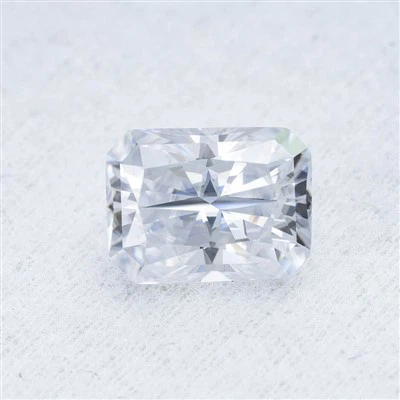
Moissanite pendants have gained significant popularity in the jewelry market due to their remarkable brilliance, durability, and affordability compared to traditional diamonds. As a moissanite pendant supplier, I often receive inquiries from customers regarding the various aspects of moissanite, including its resistance to heat. In this blog post, I will delve into the topic of whether moissanite pendants are affected by heat, providing you with comprehensive insights based on scientific knowledge and industry experience.
Understanding Moissanite
Before discussing the impact of heat on moissanite pendants, it is essential to understand what moissanite is. Moissanite is a naturally occurring mineral composed of silicon carbide (SiC). However, most moissanite used in jewelry today is lab - created. Lab - grown moissanite has the same physical and chemical properties as its natural counterpart. It is known for its high refractive index, which gives it a fire and brilliance that can rival that of diamonds. Moissanite is also very hard, with a Mohs hardness of 9.25, making it suitable for everyday wear in pendants and other jewelry pieces.
The Physical Properties of Moissanite Related to Heat
One of the key factors that determine how a material responds to heat is its thermal conductivity. Moissanite has relatively high thermal conductivity, which means it can transfer heat quickly. This property is both an advantage and a consideration when it comes to heat exposure.
On one hand, high thermal conductivity allows moissanite to dissipate heat efficiently. When a moissanite pendant is exposed to a moderate amount of heat, the heat can spread across the stone, reducing the risk of localized overheating that could potentially cause damage. For example, if you are wearing a moissanite pendant on a hot day, the heat from the sun or your body will be distributed evenly throughout the stone, and the moissanite is less likely to be damaged due to uneven heating.
On the other hand, extreme heat can still pose a threat to moissanite. Although moissanite has a high melting point (around 2700 - 3000°C), at very high temperatures, chemical reactions can occur. In an oxygen - rich environment, moissanite can oxidize when heated to extremely high temperatures. Oxidation can cause a change in the surface properties of the moissanite, potentially affecting its appearance.
Common Heat Sources and Their Effects
Everyday Heat
In normal daily life, moissanite pendants are exposed to a variety of heat sources. The most common is body heat. Our bodies maintain a relatively constant temperature of around 37°C. This level of heat has no negative impact on moissanite. The high thermal conductivity of moissanite allows it to adapt to the body temperature without any structural or aesthetic changes.
Another everyday heat source is sunlight. Sunlight can heat up the pendant, especially if it is left in direct sunlight for an extended period. However, the heat from sunlight is generally not intense enough to cause damage to moissanite. The sun's rays may cause the pendant to feel warm to the touch, but the moissanite will remain stable.
Industrial and Extreme Heat
In industrial settings or during certain activities, moissanite pendants may be exposed to much higher levels of heat. For instance, if you work in a kitchen near a hot stove or in a foundry, the pendant could be exposed to intense heat. At temperatures above 1000°C, the risk of oxidation and other chemical reactions increases significantly.
If a moissanite pendant is accidentally exposed to an open flame, such as a candle or a gas stove flame, the heat can be concentrated on a small area of the stone. This uneven heating can potentially cause thermal stress, which may lead to cracking or chipping of the moissanite.
Heat Resistance in Different Settings
The setting of a moissanite pendant also plays a role in how it responds to heat. Most moissanite pendants are set in metal settings, such as sterling silver or gold. Different metals have different thermal expansion coefficients. When the pendant is heated, the metal and the moissanite may expand at different rates.


If the metal expands much more than the moissanite, it can put pressure on the stone, potentially causing it to become loose or even crack. For example, in a sterling silver setting, silver has a relatively high coefficient of thermal expansion. When exposed to heat, the silver may expand and exert pressure on the moissanite. However, if the setting is well - designed and the jeweler has taken into account the thermal properties of both the metal and the moissanite, the risk of damage can be minimized.
Maintaining Moissanite Pendants in Heat - Prone Situations
As a moissanite pendant supplier, I always recommend taking precautions to protect your moissanite pendant from excessive heat. Here are some tips:
- Avoid direct contact with extreme heat sources: Do not wear your moissanite pendant when working near open flames, in a kitchen with a hot stove, or in industrial settings where high - temperature equipment is used.
- Remove the pendant during hot activities: If you are going to be in a sauna or a hot tub, it is best to remove your pendant. The high humidity and heat in these environments can potentially affect the pendant, especially if there are any chemical substances in the water.
- Store the pendant properly: When not in use, store your moissanite pendant in a cool, dry place. Avoid storing it in direct sunlight or near a heat source, such as a radiator.
Our Moissanite Pendant Collection
At our company, we offer a wide range of moissanite pendants, including the Pisces Symbol Moissanite Pendant and the Aries Symbol Moissanite Pendant. These pendants are crafted with high - quality moissanite and carefully designed settings to ensure both beauty and durability. Our team of experts ensures that each pendant meets the highest standards of quality, taking into account the thermal properties of moissanite and the metal settings.
Conclusion
In conclusion, while moissanite pendants are generally resistant to normal everyday heat due to their high thermal conductivity, extreme heat can pose a risk. Oxidation, thermal stress, and the differential expansion of the metal setting and the moissanite are all factors to consider when it comes to heat exposure. By taking proper precautions, you can enjoy your moissanite pendant for a long time without worrying about heat - related damage.
If you are interested in purchasing moissanite pendants or have any questions about our products, please feel free to contact us for a procurement discussion. We are always ready to provide you with the best advice and high - quality products.
References
- "The Properties of Moissanite" - Journal of Gemmology
- "Thermal Conductivity in Gemstones" - Gemological Research Institute
- "Jewelry Manufacturing and Heat Resistance" - International Jewelry Magazine