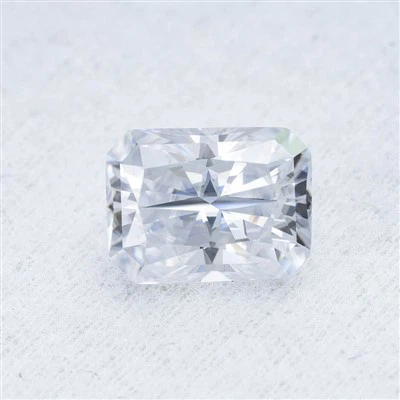
Are moissanite pendants real? That's a question I get asked a lot as a moissanite pendant supplier. And it's a fair one, considering the confusion that often surrounds moissanite. So, let's dive in and clear things up.
First off, what is moissanite? Well, moissanite is a gemstone that was first discovered in 1893 by a French scientist named Henri Moissan. He found tiny particles of this gem in a meteor crater in Arizona. At first, he thought it was diamond, but further analysis revealed it was a different mineral altogether. It's made of silicon carbide, and it has some pretty amazing properties.
When people ask if moissanite pendants are "real," they're usually wondering if they're as good as diamonds. In a way, moissanite is very real. It's a naturally - occurring mineral, although most of the moissanite used in jewelry today is lab - created. The lab - created part doesn't make it any less real. It just means that we can control the quality and size of the stones better.
One of the things that makes moissanite so great is its brilliance. It has a higher refractive index than diamond, which means it sparkles even more. When you look at a Pisces Symbol Moissanite Pendant, you'll notice how it catches the light and throws off these amazing flashes of color. It's really eye - catching.
In terms of durability, moissanite is also a great choice. It has a hardness of 9.25 on the Mohs scale, which is just below diamond (which has a hardness of 10). This means it's very resistant to scratches and can withstand daily wear. So, if you're wearing a Aries Symbol Moissanite Pendant every day, you don't have to worry about it getting damaged easily.
Another aspect where moissanite shines is its affordability. Diamonds can be incredibly expensive, and the price often depends on factors like the 4Cs (carat, cut, color, and clarity). Moissanite, on the other hand, offers a similar look at a fraction of the cost. You can get a beautiful moissanite pendant that looks just as good as a diamond pendant without breaking the bank.
Now, some people might still be skeptical. They might think that because moissanite is lab - created, it's not as valuable. But value is subjective. Sure, diamonds have a long - standing cultural and historical value, but moissanite has its own appeal. It's a modern alternative that offers great beauty and performance.
When it comes to the market, moissanite pendants are becoming more and more popular. People are looking for something different, something that stands out. And moissanite fits the bill. It's unique, and it gives you that luxury look without the hefty price tag.
As a supplier, I've seen firsthand how customers react to moissanite pendants. They're always impressed by the sparkle and the quality. And when they find out about the price, they're even more sold. I've had customers who were initially set on buying a diamond pendant but ended up choosing moissanite because they realized they could get a bigger and more beautiful stone for their money.
One of the things I love about moissanite is its versatility. We can create all sorts of pendant designs, from simple and elegant to bold and elaborate. Whether you're looking for a pendant to wear every day or for a special occasion, there's a moissanite pendant out there for you.


So, are moissanite pendants real? Absolutely. They're real gemstones with real beauty and real value. They offer a great alternative to diamonds, especially if you're on a budget or if you're looking for something a bit different.
If you're interested in learning more about our moissanite pendants or if you're thinking about making a purchase, I'd love to talk to you. We have a wide range of designs and sizes to choose from, and we can work with you to find the perfect pendant for your needs. Whether you're a retailer looking to stock our products or an individual looking for a unique piece of jewelry, we're here to help. Just reach out, and let's start the conversation.
References
- "The History of Moissanite" - Gemological Institute of America
- "Moissanite: A Modern Gemstone" - Jewelry Industry Journal