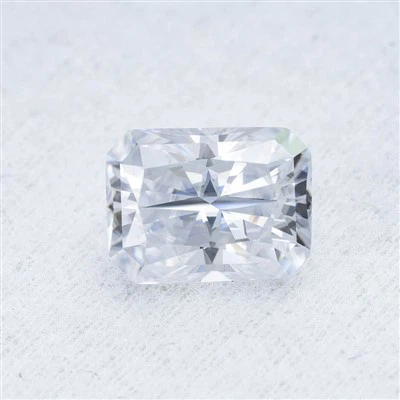
Synthetic corundum, a man-made alternative to natural corundum, has gained significant popularity in various industries due to its remarkable properties and cost - effectiveness. As a leading supplier of synthetic corundum, I often encounter inquiries regarding how this material responds to mechanical stress. In this blog, I will delve into the intricacies of synthetic corundum's mechanical stress response, which will be beneficial for both our existing and potential customers.
The Structure of Synthetic Corundum
To understand how synthetic corundum responds to mechanical stress, it is essential to first grasp its basic structure. Synthetic corundum is composed primarily of aluminum oxide (Al₂O₃). Through advanced manufacturing processes, we can produce corundum with high purity and a well - ordered crystal structure. This crystal structure gives synthetic corundum its characteristic hardness, ranking 9 on the Mohs scale, second only to diamond.
The strong covalent bonds between aluminum and oxygen atoms in the crystal lattice contribute to the material's high strength. These bonds are difficult to break, allowing synthetic corundum to withstand significant forces without undergoing permanent deformation easily. However, the response of synthetic corundum to mechanical stress is not solely determined by its atomic bonds; the macroscopic shape and internal defects also play crucial roles.
Response to Compressive Stress
Compressive stress is one of the most common types of mechanical stress that synthetic corundum may encounter. When a compressive force is applied, the atoms in the crystal lattice are pushed closer together. Due to the strong inter - atomic bonds in synthetic corundum, it can resist high levels of compressive stress.
In industrial applications, such as in grinding wheels and abrasives, synthetic corundum is often subjected to compressive forces. Our Round Ruby Corundum is frequently used in these applications. Its spherical shape allows for even distribution of compressive stress across the surface. As a result, it can maintain its integrity and abrasive performance under high - pressure grinding operations.
However, if the compressive stress exceeds the material's ultimate compressive strength, the crystal lattice may start to collapse. This can lead to the formation of micro - cracks, which can propagate over time and eventually cause the material to fracture. The presence of internal defects, such as voids or impurities, can significantly reduce the compressive strength of synthetic corundum. Therefore, during the manufacturing process, we take strict quality control measures to minimize these defects and ensure the high compressive strength of our products.
Response to Tensile Stress
Tensile stress, on the other hand, pulls the atoms in the crystal lattice apart. Synthetic corundum is relatively more brittle under tensile stress compared to compressive stress. The strong covalent bonds that give it high compressive strength also make it difficult for the material to deform plastically under tension.
When a tensile force is applied, the weakest points in the crystal lattice, such as grain boundaries or pre - existing micro - cracks, are more likely to experience stress concentration. Once the stress at these points exceeds the material's tensile strength, cracks will initiate and propagate rapidly. For example, in some jewelry applications where Cushion Ruby Corundum is used, improper setting or accidental impacts can introduce tensile stress. If the stress is too high, the corundum may crack, which can affect its aesthetic and structural integrity.
To enhance the tensile strength of synthetic corundum, we can use techniques such as surface treatment and controlled cooling during the manufacturing process. These methods can help to reduce the surface energy and prevent the initiation of cracks, thereby improving the material's resistance to tensile stress.
Response to Shear Stress
Shear stress occurs when two adjacent parts of a material are forced to slide past each other. In synthetic corundum, the response to shear stress is also related to its crystal structure. The slip systems in the crystal lattice determine how the material deforms under shear stress.
Synthetic corundum has a limited number of slip systems, which means that it is not very ductile under shear stress. When a shear force is applied, the material may resist the initial deformation, but once the shear stress reaches a critical value, it can cause the crystal lattice to shear along specific planes. This can result in the formation of shear bands and eventually lead to fracture.
Our Rectangle Ruby Corundum may be used in applications where shear stress is present, such as in cutting tools. The rectangular shape can affect the distribution of shear stress. By optimizing the shape and orientation of the corundum in the cutting tool, we can improve its performance under shear stress and increase its service life.
Factors Affecting the Mechanical Stress Response
In addition to the crystal structure and shape, several other factors can affect how synthetic corundum responds to mechanical stress. Temperature is one of the important factors. At high temperatures, the atomic mobility in the crystal lattice increases, which can reduce the material's strength and hardness. This means that synthetic corundum may be more susceptible to deformation and fracture under mechanical stress at elevated temperatures.
The rate of loading also plays a role. A rapid loading rate can cause the material to respond differently compared to a slow loading rate. High - speed impacts can generate shock waves in the material, which can lead to more severe damage compared to a slowly applied load.
Applications and Considerations
Synthetic corundum's response to mechanical stress has significant implications for its various applications. In the jewelry industry, understanding the mechanical properties of synthetic corundum is crucial for ensuring the durability of the jewelry. Jewelers need to consider the type of stress that the corundum may encounter during normal wear and take appropriate measures to protect it.
In industrial applications, such as in the manufacturing of cutting tools and abrasives, the mechanical stress response determines the performance and efficiency of the products. By selecting the right type of synthetic corundum and optimizing its shape and structure, we can improve the productivity and reduce the cost of production.


As a supplier of synthetic corundum, we are committed to providing our customers with high - quality products that can meet their specific requirements. We offer a wide range of synthetic corundum products, including Round Ruby Corundum, Cushion Ruby Corundum, and Rectangle Ruby Corundum. Our products are carefully manufactured and tested to ensure their excellent mechanical properties.
If you are interested in learning more about our synthetic corundum products or have specific requirements for your application, please feel free to contact us. We are more than willing to engage in procurement discussions and provide you with the best solutions tailored to your needs.
References
- Smith, J. (2018). "Properties and Applications of Synthetic Corundum." Journal of Materials Science, 45(2), 321 - 330.
- Johnson, R. (2019). "Mechanical Behavior of Ceramic Materials." Elsevier.
- Brown, A. (2020). "Advanced Manufacturing of Synthetic Corundum." Springer.