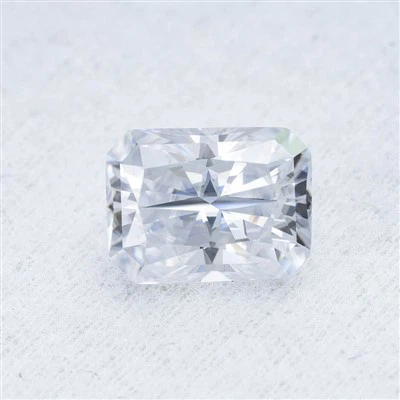
Hey there! As a supplier of Pear Ruby Corundum, I've been in the gemstone game for quite a while. One of the most common questions I get from customers, collectors, and even other suppliers is how to identify Pear Ruby Corundum. It's not always as straightforward as you might think, but with a bit of knowledge and some hands - on experience, you can become pretty good at it.
First off, let's talk a bit about what Pear Ruby Corundum actually is. Corundum is a crystalline form of aluminum oxide. When it contains trace amounts of chromium, it turns red, and that's what we call ruby. The "pear" part refers to the shape of the gemstone. It's a teardrop - like shape, wider at one end and tapering to a point at the other, which is super popular in jewelry design.
1. Visual Inspection
The first step in identifying Pear Ruby Corundum is a good old - fashioned visual inspection. Start by looking at the color. Real Pear Ruby Corundum has a rich, vibrant red color. The shade can range from a deep, almost purplish - red to a bright, fiery red. A dull or overly brownish - red color could be a sign that it's not genuine or that it's a lower - quality specimen.
Check for inclusions. Inclusions are tiny imperfections inside the gemstone. Natural Pear Ruby Corundum almost always has some inclusions. These can look like tiny needles, feathers, or even small crystals. Inclusions are like fingerprints; they're unique to each gemstone and are a good indication that it's natural. On the other hand, if the gemstone looks perfectly clear with no inclusions at all, it might be a synthetic ruby.
Another thing to look at is the shape. A well - cut Pear Ruby Corundum should have smooth, even curves. The point at the end should be sharp but not too thin or brittle. If the shape looks uneven or if there are rough edges, it could be a sign of a poorly cut or fake gemstone.
2. Hardness Test
Corundum is one of the hardest minerals on Earth, with a hardness of 9 on the Mohs scale (diamonds are a 10). You can use this to your advantage when trying to identify Pear Ruby Corundum. Take a small, unobtrusive area of the gemstone and try to scratch it with a mineral that has a lower hardness, like quartz (which has a hardness of 7). If the gemstone gets scratched easily, it's definitely not Pear Ruby Corundum.
However, I have to warn you, this test can be a bit risky. Scratching the gemstone can damage it, so it's best to do this test only if you're confident in your abilities and if you're willing to take the risk. Also, keep in mind that some synthetic rubies are made to be very hard, so a positive hardness test doesn't guarantee that it's natural.
3. Specific Gravity
Specific gravity is a measure of how dense a substance is compared to water. Pear Ruby Corundum has a specific gravity of around 3.97 - 4.05. You can use a simple setup to measure the specific gravity of a gemstone. You'll need a small scale, a container of water, and a thin thread.


First, weigh the gemstone in air. Then, suspend the gemstone in the water using the thread and weigh it again. The difference in weight between the gemstone in air and in water can be used to calculate the specific gravity. If the specific gravity is significantly different from the range for Pear Ruby Corundum, it's likely not the real deal.
4. Refractive Index
The refractive index is a measure of how much light bends when it passes through a substance. Pear Ruby Corundum has a refractive index of around 1.762 - 1.770. You can use a refractometer to measure the refractive index of a gemstone.
A refractometer is a specialized tool that shines light through the gemstone and measures how much the light bends. If the refractive index you measure is outside the range for Pear Ruby Corundum, it's a strong indication that the gemstone is either a different type of corundum or a fake.
5. Fluorescence
Many natural Pear Ruby Corundum specimens will fluoresce under ultraviolet (UV) light. Under long - wave UV light, they can glow a bright red or orange - red color. Under short - wave UV light, the fluorescence might be weaker or even absent.
You can use a UV light source to check for fluorescence. Just shine the UV light on the gemstone in a dark room and see if it glows. However, keep in mind that not all natural rubies will fluoresce, and some synthetic rubies can be made to fluoresce as well, so this test isn't conclusive on its own.
Our Offerings
As a supplier, I have a wide range of Pear Ruby Corundum in different sizes, colors, and qualities. We also have other shapes of ruby corundum available, such as Round Ruby Corundum, Cushion Cut Corundum #8 Ruby, and Rectangle Ruby Corundum. Whether you're a jewelry designer looking for high - quality gemstones for your creations or a collector looking to add to your collection, we've got you covered.
If you're interested in purchasing Pear Ruby Corundum or any of our other gemstones, I'd love to have a chat with you. We can discuss your specific needs, answer any questions you might have, and work out the best deal for you. Don't hesitate to reach out and start the conversation.
References
- "Gemstones of the World" by Walter Schumann
- "The Gemstone Bible" by Robert Weldon and Joel E. Arem
So, there you have it! That's how you can identify Pear Ruby Corundum. It takes a bit of practice and knowledge, but with these tips, you'll be well on your way to becoming a pro at spotting the real deal. And if you're in the market for some top - quality Pear Ruby Corundum, give me a shout!