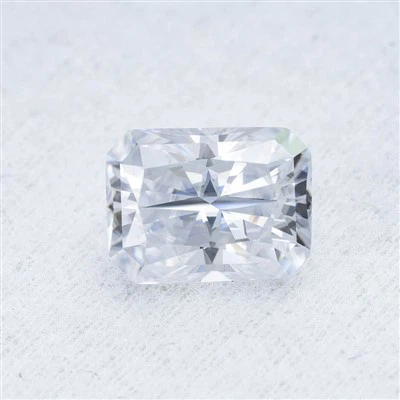
Hey there! As a supplier of Pear Ruby Corundum, I often get asked about the hardness of this beautiful gemstone on the Mohs scale. So, I thought I'd take a few minutes to break it down for you and give you all the deets.
First off, let's talk about what the Mohs scale is. It's a way to measure the hardness of minerals, developed by a German geologist named Friedrich Mohs back in 1812. The scale ranges from 1 (the softest) to 10 (the hardest), with each number representing a mineral that can scratch all the minerals below it on the scale. For example, a diamond, which is a 10 on the Mohs scale, can scratch any other mineral, while talc, a 1, can be scratched by just about anything.
Now, where does Pear Ruby Corundum fit on this scale? Well, corundum in general, which includes both rubies and sapphires, is a 9 on the Mohs scale. That means it's incredibly hard and durable, second only to diamonds. This high level of hardness makes Pear Ruby Corundum a great choice for jewelry, as it can withstand the wear and tear of daily use without getting scratched or damaged easily.
Why is hardness so important when it comes to gemstones? For one, it affects the gemstone's ability to hold up over time. A harder gemstone like Pear Ruby Corundum is less likely to get scratched or chipped, which means your jewelry will look great for years to come. It also makes the gemstone more suitable for certain types of jewelry settings. For example, if you're thinking about getting a ring with a Pear Ruby Corundum, its hardness ensures that it can handle being set in a prong setting, where it might be more exposed to potential damage.
Another benefit of the high hardness of Pear Ruby Corundum is that it allows for a high level of polish. When a gemstone is cut and polished, a harder surface can achieve a smoother, more brilliant finish. This gives Pear Ruby Corundum its characteristic sparkle and shine, making it even more eye - catching.


Now, let's compare Pear Ruby Corundum to some other popular gemstones in terms of hardness. Emeralds, for instance, are only about 7.5 to 8 on the Mohs scale. While they're still relatively hard, they're more prone to scratching and cracking compared to Pear Ruby Corundum. Amethyst, which is a type of quartz, is a 7 on the Mohs scale. So, you can see that Pear Ruby Corundum has a significant advantage in terms of durability.
As a supplier, I offer a variety of shapes and cuts of Ruby Corundum, not just the pear shape. You might also be interested in Cushion Ruby Corundum, Round Ruby Corundum, or Oval Ruby Corundum. Each shape has its own unique charm, and the high hardness of the corundum ensures that all these gemstones will maintain their beauty.
When it comes to caring for your Pear Ruby Corundum jewelry, its high hardness means you don't have to be overly cautious. However, it's still a good idea to clean it regularly with a soft brush and mild soap to keep it looking its best. Avoid exposing it to harsh chemicals or extreme temperatures, as these can potentially damage the gemstone.
If you're in the market for high - quality Pear Ruby Corundum or any of our other Ruby Corundum shapes, I'd love to hear from you. Whether you're a jewelry designer looking for the perfect gemstone for your next creation or an individual wanting to treat yourself or someone special, we've got you covered. Our gemstones are sourced with the highest standards of quality, and we're committed to providing excellent customer service.
So, don't hesitate to reach out if you have any questions or if you're ready to start a purchase. We can discuss your specific needs, the different options available, and work together to find the perfect Pear Ruby Corundum for you.
In conclusion, the 9 on the Mohs scale hardness of Pear Ruby Corundum makes it a top - notch choice for jewelry. Its durability, ability to achieve a beautiful polish, and overall resistance to damage make it a gemstone that will last a lifetime. Whether you're wearing it as a ring, a pendant, or in any other form of jewelry, you can be confident that your Pear Ruby Corundum will continue to shine bright.
References
- "Gemstones of the World" by Walter Schumann. This book provides in - depth information about various gemstones, including their properties and characteristics on the Mohs scale.
- "The Gemstone Bible" by Robert Weldon. It offers a comprehensive guide to gemstones, with details on hardness and other important factors.