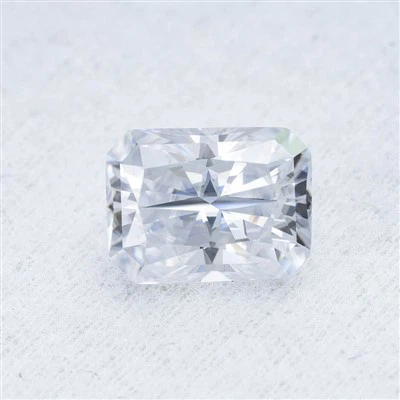
When it comes to choosing a diamond for jewelry, consumers are often faced with a significant decision: natural diamonds or alternatives like moissanite. As a supplier of Asscher Moissanite Diamonds, I've witnessed firsthand the growing interest in moissanite as a more affordable and sustainable option. In this blog, I'll explore the price difference between Asscher Moissanite Diamonds and natural diamonds, shedding light on the factors that contribute to these disparities and why moissanite might be the ideal choice for your next jewelry purchase.
Understanding the Basics: Asscher Moissanite Diamonds and Natural Diamonds
Before delving into the price differences, it's essential to understand what Asscher Moissanite Diamonds and natural diamonds are. Natural diamonds are formed deep within the Earth's mantle over billions of years under extreme heat and pressure. They are composed of carbon atoms arranged in a crystal lattice structure, which gives them their remarkable hardness and brilliance.
On the other hand, moissanite is a lab - created gemstone. It was first discovered in a meteorite crater by Henri Moissan in 1893, but today, most moissanite used in jewelry is synthesized in a laboratory. Asscher cut moissanite has a unique octagonal shape with cropped corners, which offers a classic and elegant look similar to the Asscher - cut natural diamonds.
Factors Affecting the Price of Natural Diamonds
The price of natural diamonds is determined by several factors, often referred to as the "Four Cs": carat, cut, color, and clarity.
- Carat: Carat weight is a measure of a diamond's size. Larger diamonds are rarer and, therefore, more expensive. A one - carat diamond can cost significantly more than a half - carat diamond, even if the other Cs are similar.
- Cut: The cut of a diamond affects its ability to reflect and refract light. A well - cut diamond will have greater brilliance and fire. Precision cutting requires skill and time, which adds to the cost.
- Color: The color of a diamond is graded on a scale from D (colorless) to Z (light yellow or brown). Colorless diamonds are the rarest and most valuable, while diamonds with more noticeable color are less expensive.
- Clarity: Clarity refers to the presence of internal and external flaws, known as inclusions and blemishes. Diamonds with fewer inclusions are rarer and command higher prices.
In addition to the Four Cs, other factors such as the diamond's origin, certification, and market demand also influence its price. For example, diamonds from certain mines, like those in Africa or Australia, may be more expensive due to their reputation for high quality.
Price Factors of Asscher Moissanite Diamonds
The price of Asscher Moissanite Diamonds is also influenced by several factors, but they differ from those of natural diamonds.
- Size: Similar to natural diamonds, larger moissanite stones generally cost more than smaller ones. However, the price increase is not as steep as with natural diamonds.
- Quality: The quality of moissanite is determined by its color, clarity, and cut. High - quality moissanite is nearly colorless and has few inclusions, which makes it more expensive. But even the highest - quality moissanite is still more affordable than a natural diamond of the same size and appearance.
- Production Costs: Since moissanite is lab - created, the production process and associated costs play a role in its price. However, compared to the mining, extraction, and processing of natural diamonds, the production of moissanite is more cost - effective.
The Price Difference: A Comparative Analysis
To illustrate the price difference between Asscher Moissanite Diamonds and natural diamonds, let's consider some examples.
A one - carat, D - color, VS1 - clarity, well - cut natural diamond can cost anywhere from $5,000 to $15,000 or more, depending on the market conditions and other factors. In contrast, a one - carat Asscher Moissanite Diamond of similar quality (near - colorless and high clarity) may cost between $500 and $1,500.
For a larger diamond, say a three - carat natural diamond with excellent color and clarity, the price can easily exceed $50,000. A three - carat Asscher Moissanite Diamond, on the other hand, would cost around $1,500 to $4,500.
This significant price difference makes Asscher Moissanite Diamonds an attractive option for consumers who want a large, high - quality gemstone without breaking the bank.
Other Advantages of Asscher Moissanite Diamonds
Beyond the price difference, there are other reasons why Asscher Moissanite Diamonds are becoming increasingly popular.
- Sustainability: As a lab - created gemstone, moissanite has a much lower environmental impact compared to natural diamonds. Diamond mining can cause significant environmental damage, including deforestation, soil erosion, and water pollution.
- Ethical Considerations: The diamond industry has faced issues related to conflict diamonds, also known as blood diamonds. Moissanite, being lab - created, does not have these ethical concerns.
- Appearance: Asscher Moissanite Diamonds have a similar appearance to natural diamonds. They are highly refractive, which means they can display more fire and brilliance than many natural diamonds.
Exploring Other Moissanite Cuts
If you're interested in moissanite but not sold on the Asscher cut, there are other options available. For instance, the Trillion Moissanite Diamond has a unique triangular shape that offers a modern and edgy look. The Cushion Moissanite Diamond has a soft, rounded shape with large facets, providing a romantic and vintage appeal. And the Marquise Moissanite Diamond is known for its elongated shape, which can make fingers appear longer and more slender.


Conclusion: Making the Right Choice
The price difference between Asscher Moissanite Diamonds and natural diamonds is substantial, making moissanite an appealing option for many consumers. Whether you're looking for an engagement ring, a pendant, or other jewelry, Asscher Moissanite Diamonds offer a beautiful, affordable, and sustainable alternative to natural diamonds.
If you're interested in learning more about our Asscher Moissanite Diamonds or other moissanite products, I encourage you to reach out for a purchase consultation. We're here to help you find the perfect gemstone for your needs and budget.
References
- GIA (Gemological Institute of America). "The 4Cs of Diamond Quality."
- International Gem Society. "Moissanite: A Gemstone Overview."