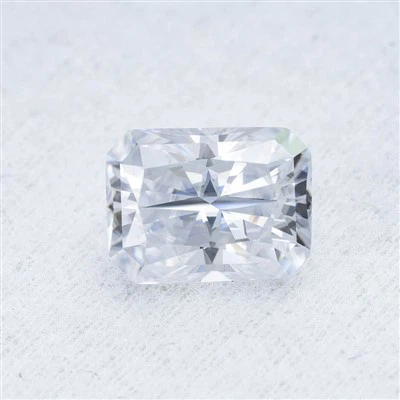
Hey there! As a supplier of Oval Ruby Corundum, I often get asked by customers, "How do I know if an Oval Ruby Corundum is heat - treated?" Well, it's a valid question, and I'm here to share some insights with you.
First off, let's understand why heat treatment is done on Ruby Corundum. Heat treatment is a common practice in the gemstone industry. It can enhance the color and clarity of the gemstone, making it more appealing to buyers. For Oval Ruby Corundum, heat treatment can intensify the red color, which is highly sought after in the market.
So, how can you tell if an Oval Ruby Corundum has been heat - treated? There are a few ways, and I'll break them down for you.
Visual Inspection
One of the first things you can do is a visual inspection. A heat - treated Oval Ruby Corundum may show some tell - tale signs. Look at the color distribution. In a natural, untreated ruby, the color is usually more evenly distributed throughout the stone. But in a heat - treated one, you might notice that the color is concentrated in certain areas, especially around fractures or inclusions.
Another thing to look for is the presence of "halos" around inclusions. When a ruby is heated, the inclusions can react with the heat, creating a kind of halo effect. This is a strong indication that the stone has been heat - treated.
However, visual inspection is not always 100% accurate. Some heat - treated rubies are so well - done that the signs are very subtle and hard to detect with the naked eye. That's when you might need to use some specialized tools.
Using a Magnifying Glass or Microscope
A magnifying glass or a microscope can be your best friend in this process. With a 10x magnifying glass, you can start to see more details of the stone. Look for small bubbles or fractures that might have been created during the heat - treatment process.
Under a microscope, you can get an even closer look. You might be able to see changes in the crystal structure of the ruby. Heat treatment can cause the crystals to re - arrange themselves, and this can be visible under high magnification.
Spectroscopy
Spectroscopy is a more advanced method. It involves using a spectrometer to analyze the light absorbed and emitted by the ruby. Different elements in the ruby absorb and emit light at specific wavelengths. Heat treatment can change the chemical composition of the ruby, which in turn changes its spectral signature.


By comparing the spectral data of the ruby in question with known data of natural and heat - treated rubies, you can get a pretty good idea of whether the stone has been heat - treated. But spectroscopy requires specialized equipment and expertise, so it's not something that the average person can do at home.
Fluorescence
Another way to check is by looking at the fluorescence of the ruby. Natural rubies usually fluoresce red under ultraviolet light. Heat - treated rubies may have a different fluorescence pattern. They might fluoresce more weakly or even have a different color of fluorescence.
However, fluorescence can also be affected by other factors, such as the presence of certain impurities in the stone. So, it's just one piece of the puzzle and should be used in conjunction with other methods.
Asking for a Certificate
One of the easiest and most reliable ways to know if an Oval Ruby Corundum is heat - treated is to ask for a certificate from a reputable gemological laboratory. Labs like the Gemological Institute of America (GIA) or the International Gemological Institute (IGI) can perform detailed tests on the ruby and provide a report that states whether the stone has been heat - treated or not.
A certificate from a trusted lab gives you peace of mind. It's like having a guarantee that you're getting what you pay for. If a seller is hesitant to provide a certificate, it could be a red flag.
Now, as a supplier of Oval Ruby Corundum, I understand the importance of transparency. I always provide certificates for my stones, so my customers can be confident in their purchases.
We also have other great options in our collection, like the Cushion Cut Corundum #8 Ruby and Cushion Ruby Corundum. These stones are also carefully inspected for any signs of heat - treatment, and we make sure to provide accurate information to our customers.
If you're in the market for high - quality Oval Ruby Corundum or any of our other gemstones, don't hesitate to reach out. Whether you're a jeweler looking to source stones for your designs or a collector looking to add to your collection, we've got you covered.
In conclusion, determining whether an Oval Ruby Corundum is heat - treated is not always easy. It requires a combination of visual inspection, the use of tools, and sometimes the help of a professional gemological lab. But with the right knowledge and methods, you can make an informed decision when buying a ruby.
So, if you're interested in purchasing our Oval Ruby Corundum or any of our other gemstones, feel free to start a conversation with us. We're here to answer all your questions and help you find the perfect stone for your needs. Let's have a chat and see how we can work together!
References
- "Gemstone Identification: A Comprehensive Guide" by Richard Hughes
- "The World of Gemstones" by Robert Weldon