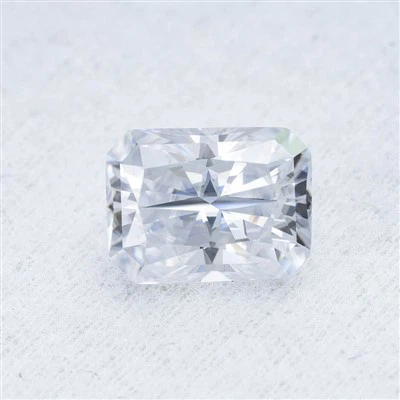
Moissanite, a remarkable gemstone, has gained significant popularity in the world of jewelry, especially in pendants. When it comes to moissanite pendant stones, one term that often surfaces is "culet." In this blog post, we'll delve into what the culet of a moissanite pendant stone is, its importance, and how it relates to the overall quality and beauty of the pendant. As a moissanite pendant supplier, I've witnessed firsthand the impact that the culet can have on these exquisite pieces.
Understanding the Basics of Moissanite
Before we dive into the concept of the culet, let's briefly touch on what moissanite is. Moissanite is a lab - created gemstone that was first discovered in a meteor crater in Arizona in 1893 by Dr. Henri Moissan. It has a chemical composition of silicon carbide (SiC) and exhibits remarkable optical properties. Moissanite is known for its high refractive index, which means it can disperse light in a way that creates a dazzling play of colors, similar to a diamond but with even more fire in some cases. It is also extremely hard, scoring 9.25 on the Mohs scale of hardness, making it a durable choice for jewelry, including pendants.
What is the Culet?
The culet is a small facet located at the very bottom tip of a gemstone's pavilion. The pavilion is the lower part of the gemstone that extends from the girdle (the widest part of the gem) to the point at the bottom. In the case of a well - cut moissanite pendant stone, the culet serves several purposes.
- Structural Integrity: During the cutting process, creating a perfectly pointed tip at the bottom of the pavilion can be extremely difficult and may make the gemstone more prone to chipping or damage. The culet provides a small, flat surface that adds a bit of stability to the gemstone. It helps to prevent the delicate tip of the pavilion from breaking off during setting or normal wear.
- Aesthetic Considerations: From an aesthetic perspective, the size of the culet can affect how light interacts with the moissanite. A very large culet can create a visible dark spot at the bottom of the gemstone when viewed from the top. This is because a large culet can disrupt the normal flow of light through the stone, causing light to leak out in an unappealing way. On the other hand, a well - proportioned and small culet is often less noticeable and allows light to reflect and refract within the stone in a more harmonious manner, enhancing the overall sparkle and beauty of the moissanite pendant.
Culet Sizes and Grades
Culet sizes are typically graded according to a standardized scale. The most common grades range from none (indicating a pointed pavilion with no culet) to very large.
- None: A moissanite with no culet has a perfectly pointed pavilion. While this can create a more elegant look, it also comes with the risk of damage as mentioned earlier.
- Very Small: This is a desirable culet size. It is barely visible to the naked eye and has minimal impact on the light performance of the moissanite. A very small culet provides the necessary structural support without sacrificing too much of the gemstone's optical properties.
- Small: Slightly larger than a very small culet, but still relatively inconspicuous. It offers a good balance between structural integrity and light reflection.
- Medium: A medium - sized culet may be more visible, especially when the moissanite is viewed under certain lighting conditions or at close range. It can start to have a minor effect on the light performance, potentially causing a small dark area at the bottom of the stone.
- Large and Very Large: These culet sizes are more likely to be visible and can have a significant impact on the appearance of the moissanite. A large or very large culet can make the stone look less brilliant and may be considered a flaw in terms of cut quality.
Impact on Moissanite Pendant Quality
The culet size can have a direct impact on the overall quality of a moissanite pendant. When choosing a moissanite pendant, customers often look for a stone that sparkles and has a high level of clarity. A pendant with a well - proportioned culet will generally exhibit better light performance, with more light being reflected back to the viewer's eye, creating a more brilliant and eye - catching piece.
On the other hand, a pendant with a large culet may not perform as well optically. It can make the moissanite appear duller and less attractive, which can ultimately affect the value of the pendant. As a moissanite pendant supplier, we carefully select stones with appropriate culet sizes to ensure that our pendants meet the highest standards of quality and beauty.
Examples of Moissanite Pendants
We offer a wide range of moissanite pendants, each carefully crafted to showcase the beauty of the gemstone. For instance, our Pisces Symbol Moissanite Pendant features a moissanite with a very small culet. This allows the stone to shine brightly and the unique Pisces symbol design to truly stand out. The small culet ensures that light is reflected and refracted in a way that enhances the overall aesthetic appeal of the pendant.
Another popular option is our 925 Sterling Silver Virgo Style DEF VVS1 Melee Moissanite Zodiac Pendant. The moissanite used in this pendant has a well - proportioned culet that contributes to its high level of brilliance. The DEF color grade and VVS1 clarity, combined with the proper culet size, make this pendant a stunning piece of jewelry.
Our 925 Sterling Silver Cancer Style DEF VVS1 Melee Moissanite Jewelry Pendant also benefits from a carefully chosen culet size. The small culet allows the moissanite to display its full potential in terms of light dispersion and sparkle, complementing the beautiful Cancer - themed design.


Choosing the Right Moissanite Pendant Based on Culet
When you're in the market for a moissanite pendant, here are some tips to consider regarding the culet:
- Inspect the Stone: If possible, examine the moissanite pendant in person. Look at the bottom of the stone to see if the culet is visible. A well - cut moissanite should have a culet that is either not visible or barely noticeable to the naked eye.
- Ask for Information: Don't hesitate to ask your supplier about the culet size and grade of the moissanite in the pendant. A reputable supplier will be able to provide you with detailed information about the stone's characteristics.
- Consider Your Budget and Preferences: While a very small or no culet may be ideal from an aesthetic perspective, it may also come at a higher cost. If you're on a budget, a pendant with a small or medium culet may still offer a good balance between quality and price.
Conclusion
In conclusion, the culet of a moissanite pendant stone is an important aspect of its overall quality and appearance. It plays a role in both the structural integrity of the gemstone and how light interacts with it. As a moissanite pendant supplier, we understand the significance of the culet and strive to offer pendants with well - proportioned culets to ensure maximum beauty and durability.
If you're interested in purchasing moissanite pendants, whether for personal use or for your jewelry business, we'd love to have a conversation with you. We can provide you with more information about our products, including details about the culet sizes of our moissanite stones. Please reach out to us to start the procurement process and explore the wonderful world of moissanite pendants.
References
- "Gem Cutting: Principles and Practices" by John Sinkankas
- "The Handbook of Gemology" by Robert Webster