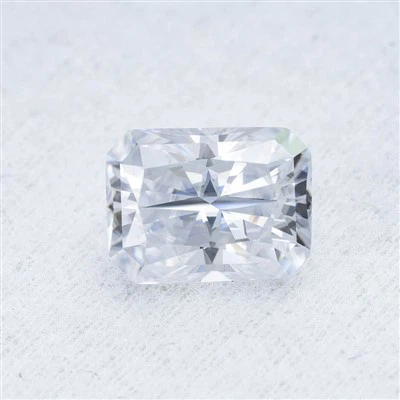
In recent years, the jewelry industry has witnessed a significant shift towards sustainability, with consumers becoming more conscious of the environmental and ethical implications of their purchases. Among the various alternatives to traditional diamonds, Asscher Moissanite Diamond has emerged as a popular choice. As a supplier of Asscher Moissanite Diamond, I am often asked whether it is a sustainable choice. In this blog post, I will explore the sustainability aspects of Asscher Moissanite Diamond and provide insights into why it can be a great option for eco - conscious consumers.
What is Asscher Moissanite Diamond?
Asscher Moissanite Diamond is a type of moissanite that is cut in the Asscher style. Moissanite is a gemstone composed of silicon carbide. It was first discovered in a meteorite crater by Henri Moissan in 1893. Initially, it was extremely rare, but with the advancement of technology, it can now be created in laboratories. The Asscher cut, on the other hand, is a step - cut diamond shape that features a square or rectangular outline with trimmed corners and a high crown. This cut gives the gemstone a unique and elegant look, similar to that of an emerald - cut diamond.
Environmental Sustainability
One of the primary reasons why Asscher Moissanite Diamond is considered a sustainable choice is its low environmental impact during the production process. Traditional diamond mining has a significant environmental footprint. It involves large - scale excavation, which can lead to deforestation, soil erosion, and habitat destruction. Mines also consume vast amounts of water and energy, and the use of chemicals such as cyanide in the extraction process can contaminate water sources.
In contrast, Asscher Moissanite Diamond is lab - created. The process of growing moissanite in a laboratory requires significantly less energy and water compared to diamond mining. There is no need for large - scale excavation, so there is no direct damage to natural habitats. Moreover, the production of moissanite can be carefully controlled, reducing the risk of pollution. This makes it a much more environmentally friendly option for those who are concerned about the planet.
Ethical Sustainability
Ethical concerns are also a major factor in the jewelry industry. The diamond trade has long been associated with issues such as human rights abuses, including child labor and exploitation of miners in some regions. These so - called “blood diamonds” have caused significant controversy and have led to the development of certification systems like the Kimberley Process to try and ensure that diamonds are sourced ethically.
However, the Kimberley Process has its limitations, and there are still concerns about the ethical sourcing of diamonds. Asscher Moissanite Diamond, being lab - created, does not have these ethical issues. The production of moissanite in a laboratory setting ensures that there is no involvement in any form of human rights abuse. Consumers can be confident that when they purchase an Asscher Moissanite Diamond, they are not contributing to any unethical practices.
Social and Economic Sustainability
From a social and economic perspective, the production of Asscher Moissanite Diamond can also have positive impacts. The laboratory - based production of moissanite creates jobs in the high - tech and manufacturing sectors. These jobs often require skilled labor, which can contribute to the development of a more educated and skilled workforce.
In addition, the affordability of Asscher Moissanite Diamond compared to natural diamonds means that more people can afford high - quality jewelry. This can have a positive impact on the jewelry market as a whole, as it allows for a wider range of consumers to participate in the industry. The increased demand for moissanite can also lead to further innovation in the production process, which can drive economic growth in the sector.
Comparison with Other Fancy - Cut Moissanite Diamonds
When considering Asscher Moissanite Diamond, it is also interesting to compare it with other fancy - cut moissanite diamonds. For example, the Emerald Cut Moissanite Diamond has a similar step - cut style but with a more rectangular shape. It offers a classic and sophisticated look, and like the Asscher cut, it is also environmentally and ethically sustainable.
The Marquise Moissanite Diamond has an elongated oval shape with pointed ends. This cut is known for its ability to make the gemstone appear larger and can add a touch of glamour to any piece of jewelry. It shares the same sustainability benefits as Asscher Moissanite Diamond, as it is also lab - created.
The Oval Moissanite Diamond is a popular choice due to its soft and elegant shape. It has a similar sparkle and brilliance to other moissanite diamonds and is a sustainable alternative to natural oval - cut diamonds. Each of these fancy - cut moissanite diamonds provides consumers with a variety of options while maintaining the high standards of sustainability.
Quality and Durability
Another important aspect to consider when evaluating the sustainability of a gemstone is its quality and durability. Asscher Moissanite Diamond is known for its high quality and durability. It has a hardness of 9.25 on the Mohs scale, which is very close to that of a diamond (10 on the Mohs scale). This means that it is resistant to scratches and can withstand daily wear and tear.
The long - lasting nature of Asscher Moissanite Diamond is an important part of its sustainability. A gemstone that lasts a long time reduces the need for frequent replacements, which in turn reduces the overall environmental impact associated with the production and disposal of jewelry. Consumers can enjoy their Asscher Moissanite Diamond jewelry for many years, making it a more sustainable choice in the long run.


Conclusion
In conclusion, Asscher Moissanite Diamond is indeed a sustainable choice. It offers significant environmental, ethical, social, and economic benefits compared to traditional diamonds. Its low environmental impact during production, lack of ethical concerns, positive contribution to the economy, and high quality and durability make it an attractive option for consumers who are looking for a sustainable and beautiful gemstone.
If you are interested in learning more about Asscher Moissanite Diamond or are considering making a purchase, I encourage you to get in touch. We are a leading supplier of Asscher Moissanite Diamond and can provide you with detailed information about our products. Whether you are a jewelry retailer looking to expand your product line or an individual consumer searching for the perfect piece of jewelry, we are here to assist you. Contact us for more information and to start a procurement negotiation.
References
- “The Environmental Impact of Diamond Mining.” World Wildlife Fund.
- “Ethical Issues in the Diamond Industry.” Amnesty International.
- “Moissanite: A Sustainable Gemstone Alternative.” Journal of Gemstone Research.