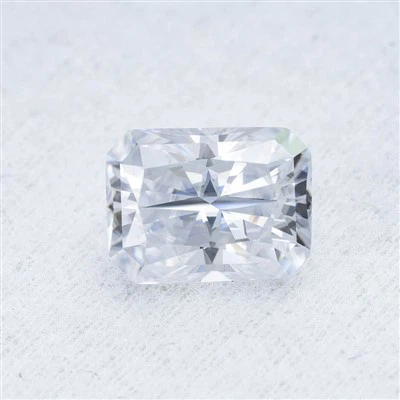
As a supplier of Pear Ruby Corundum, I've spent a significant amount of time exploring the beauty and science behind this gemstone. One of the most fascinating aspects of Pear Ruby Corundum is its interference figure. In this blog post, I'll delve into what the interference figure of Pear Ruby Corundum is, how it's formed, and its significance in the world of gemology.
Understanding Interference Figures
Before we dive into the specific interference figure of Pear Ruby Corundum, it's essential to understand what an interference figure is in the context of gemology. An interference figure is a pattern of light and dark areas that appears when a gemstone is viewed under a polarizing microscope. This pattern is created by the interaction of light waves as they pass through the gemstone's crystal structure.
Interference figures are valuable tools for gemologists because they can provide information about a gemstone's optical properties, such as its birefringence, optic sign, and orientation. By analyzing the interference figure, gemologists can identify the gemstone species, determine its quality, and detect any treatments or enhancements.
The Interference Figure of Pear Ruby Corundum
Pear Ruby Corundum belongs to the corundum family, which also includes sapphires and other types of rubies. Corundum is a crystalline form of aluminum oxide (Al₂O₃) with a trigonal crystal system. The interference figure of Pear Ruby Corundum is a characteristic pattern that can be used to identify and distinguish it from other gemstones.
When viewed under a polarizing microscope, Pear Ruby Corundum typically exhibits a uniaxial interference figure. A uniaxial interference figure is characterized by a cross-shaped pattern of light and dark areas, known as an isogyre, surrounded by a series of concentric rings, known as isochromes. The isogyre represents the direction of the optic axis of the gemstone, while the isochromes represent the variation in birefringence across the gemstone.
The appearance of the interference figure can vary depending on several factors, including the orientation of the gemstone, the thickness of the sample, and the wavelength of the light used. In general, a well-formed interference figure will have a clear and distinct isogyre and isochromes, indicating a high-quality gemstone with a uniform crystal structure.
Formation of the Interference Figure
The interference figure of Pear Ruby Corundum is formed by the interaction of light waves as they pass through the gemstone's crystal structure. When light enters a gemstone, it is split into two perpendicular components, known as the ordinary ray and the extraordinary ray. These two rays travel through the gemstone at different speeds, causing a phase difference between them.


As the two rays emerge from the gemstone, they recombine and interfere with each other, creating a pattern of light and dark areas. The specific pattern of interference depends on the relative phase difference between the two rays, which is determined by the thickness of the gemstone, the birefringence of the material, and the orientation of the crystal structure.
In the case of Pear Ruby Corundum, the trigonal crystal system causes the light waves to be split into two components with different refractive indices. This results in a birefringence, or double refraction, of the light as it passes through the gemstone. The interference figure is formed when the two components of the light recombine and interfere with each other, creating the characteristic cross-shaped pattern of the isogyre and the concentric rings of the isochromes.
Significance in Gemology
The interference figure of Pear Ruby Corundum is an important diagnostic tool in gemology. By analyzing the interference figure, gemologists can determine the optical properties of the gemstone, such as its birefringence, optic sign, and orientation. This information can be used to identify the gemstone species, detect any treatments or enhancements, and assess the quality of the gemstone.
For example, a well-formed interference figure with a clear and distinct isogyre and isochromes indicates a high-quality gemstone with a uniform crystal structure. On the other hand, a distorted or irregular interference figure may indicate the presence of inclusions, fractures, or other defects in the gemstone.
In addition to its diagnostic value, the interference figure of Pear Ruby Corundum can also be used to determine the orientation of the gemstone for cutting and polishing. By aligning the gemstone with the optic axis, gem cutters can maximize the brilliance and fire of the gemstone, resulting in a more beautiful and valuable finished product.
Other Types of Corundum and Their Interference Figures
While Pear Ruby Corundum exhibits a uniaxial interference figure, other types of corundum, such as sapphires, may exhibit different interference figures depending on their crystal structure and composition. For example, some sapphires may exhibit a biaxial interference figure, which is characterized by two isogyres and a more complex pattern of isochromes.
In addition to the interference figure, other optical properties of corundum, such as color, clarity, and luster, can also be used to identify and distinguish different types of corundum. For example, rubies are typically red in color due to the presence of chromium impurities, while sapphires can come in a variety of colors, including blue, yellow, pink, and green.
Our Product Range
As a supplier of Pear Ruby Corundum, we offer a wide range of high-quality gemstones to meet the needs of our customers. In addition to Pear Ruby Corundum, we also supply other types of corundum, including Cushion Ruby Corundum, Round Green Corundum, and Round Ruby Corundum.
Our gemstones are carefully selected and graded to ensure the highest quality and beauty. We offer a variety of sizes, shapes, and colors to choose from, allowing our customers to find the perfect gemstone for their needs. Whether you're a jeweler, a gem collector, or simply looking for a beautiful piece of jewelry, we have the gemstones you're looking for.
Contact Us for Procurement
If you're interested in purchasing Pear Ruby Corundum or any of our other gemstones, we invite you to contact us for procurement. Our team of experts is available to answer any questions you may have and to help you find the perfect gemstone for your needs. We offer competitive prices, excellent customer service, and fast shipping to ensure your satisfaction.
To learn more about our products and to place an order, please visit our website or contact us directly. We look forward to working with you and helping you find the perfect gemstone for your collection or jewelry design.
References
- Nassau, K. (1980). Gems Made by Man. Mineralogical Society of America.
- Webster, D. (2001). Gemstones of the World. Sterling Publishing Co., Inc.
- Koivula, J. I., & Fritsch, E. (1996). Photoatlas of Inclusions in Gemstones. Gemological Institute of America.