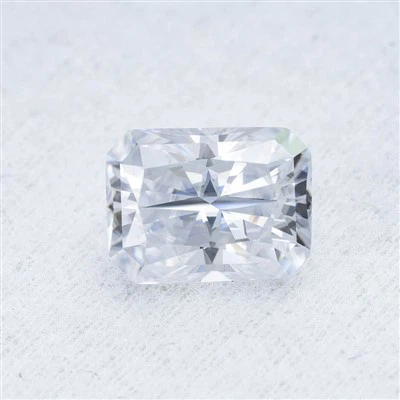
The refractive index is a fundamental optical property that plays a crucial role in determining the appearance and quality of gemstones. When it comes to Oval Ruby Corundum, understanding its refractive index can provide valuable insights for both gem enthusiasts and industry professionals. As a trusted supplier of Oval Ruby Corundum, I am excited to delve into this topic and share some in - depth knowledge.
What is Refractive Index?
Before we specifically discuss the refractive index of Oval Ruby Corundum, let's first understand what refractive index means. The refractive index (n) of a material is defined as the ratio of the speed of light in a vacuum (c) to the speed of light in the material (v), i.e., (n=\frac{c}{v}). This property describes how much light bends or refracts when it passes from one medium to another. A higher refractive index indicates that light travels more slowly through the material and bends more when entering or exiting it.
In the context of gemstones, the refractive index affects several important optical phenomena. It contributes to the gem's brilliance, which is the overall light return from the gemstone. A gem with a higher refractive index can disperse light more effectively, creating a play of colors known as fire. It also influences the gem's appearance in terms of how it interacts with light, giving it a certain depth and sparkle.
Refractive Index of Oval Ruby Corundum
Oval Ruby Corundum belongs to the corundum family, which also includes sapphires. Ruby is the red variety of corundum, and its color is mainly due to the presence of chromium impurities in the crystal structure. The refractive index of natural and synthetic Oval Ruby Corundum typically ranges from approximately 1.762 to 1.770. This relatively high refractive index is one of the reasons why ruby is so highly prized for its beauty.


The range in the refractive index values can be attributed to several factors. Firstly, the chemical composition of the ruby can vary slightly. Different levels of impurities, such as trace amounts of iron or titanium in addition to chromium, can affect the way light interacts with the crystal lattice, leading to minor variations in the refractive index. Secondly, the growth conditions of the ruby, whether it is natural or synthetic, can also have an impact. Natural rubies form under complex geological conditions over long periods of time, while synthetic rubies are grown in a controlled laboratory environment. These different growth processes can result in subtle differences in the crystal structure, which in turn can influence the refractive index.
Importance of Refractive Index for Oval Ruby Corundum
For gemstone buyers and collectors, the refractive index of Oval Ruby Corundum is an important consideration. A higher refractive index generally means a more brilliant and fiery gemstone. When light enters an Oval Ruby Corundum with a high refractive index, it is bent and reflected in such a way that it creates a captivating display of light. This can enhance the overall aesthetic appeal of the gem, making it more desirable.
In the jewelry industry, the refractive index also affects the cutting and setting of Oval Ruby Corundum. Jewelers need to take into account the gem's refractive properties when designing the cut of the stone. A well - cut oval ruby with an optimal refractive index can maximize the light return and showcase the gem's beauty to the fullest. Additionally, the setting of the gemstone should be designed in a way that allows light to enter and exit the stone easily, further enhancing its brilliance.
Comparing with Other Corundum Shapes
When comparing Oval Ruby Corundum with other shapes of corundum, such as Round Ruby Corundum and Pear Ruby Corundum, the refractive index remains relatively consistent within the corundum family. However, the shape of the gemstone can affect how the light is reflected and refracted within it.
Round Ruby Corundum, for example, has a symmetrical shape that can provide a more uniform distribution of light. This shape is often used to maximize the gem's brilliance and fire, as the circular cut allows light to enter and exit the stone from multiple angles. On the other hand, Pear Ruby Corundum has a more elongated and asymmetrical shape. This can create a unique play of light, with the tapered end of the pear shape adding an element of elegance and movement to the gemstone.
In addition to ruby corundum, there is also Round Green Corundum, which is a different variety of corundum (sapphire). The refractive index of green corundum is also in the same general range as ruby corundum, around 1.762 - 1.770. The color of the corundum is determined by different impurities; in the case of green corundum, it may be due to the presence of iron and titanium.
Our Supply of Oval Ruby Corundum
As a supplier of Oval Ruby Corundum, we take great pride in offering high - quality gemstones. Our rubies are carefully selected to ensure that they have a refractive index within the optimal range, which guarantees excellent brilliance and fire. We source our Oval Ruby Corundum from reliable mines and also have a range of synthetic options for those who prefer more consistent and affordable choices.
Our team of experts conducts thorough quality control checks on each gemstone. We use advanced refractometers to accurately measure the refractive index of our Oval Ruby Corundum, ensuring that our customers receive gems that meet the highest standards. Whether you are a jewelry designer looking for the perfect centerpiece for your next creation or a collector searching for a rare and beautiful ruby, we have the right Oval Ruby Corundum for you.
Contact for Procurement
If you are interested in purchasing Oval Ruby Corundum, we invite you to contact us for procurement discussions. We can provide you with detailed information about our product range, including the size, quality, and price of our Oval Ruby Corundum. Our dedicated sales team is ready to assist you in finding the gemstones that best suit your needs. Whether you need a single high - quality ruby for a special piece of jewelry or a large quantity for a commercial project, we are here to serve you.
References
- Nassau, K. (1980). Gems Made by Man. Mineralogical Society of America.
- Webster, G. (2006). Gemstones. Dorling Kindersley.
- Hughes, R. W. (1997). Ruby & Sapphire. Gem Trade Communications.