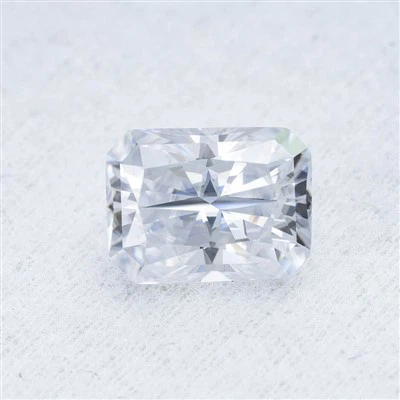
In recent years, the jewelry market has witnessed a significant shift towards more ethical and sustainable alternatives to traditional diamonds. Pear moissanite diamonds have emerged as a popular choice, offering a beautiful and affordable option that mimics the brilliance of natural diamonds. As a supplier of pear moissanite diamonds, I often encounter questions regarding their ethical implications. In this blog post, I aim to explore the ethics of pear moissanite diamonds and shed light on why they are a responsible choice for consumers.


The Environmental Impact of Traditional Diamonds
Traditional diamond mining has long been associated with significant environmental damage. The process of extracting diamonds from the earth involves large - scale open - pit and underground mining operations. These operations can lead to deforestation, soil erosion, and the destruction of natural habitats. For example, in some African countries, diamond mines have displaced local wildlife and disrupted ecological balance.
Moreover, diamond mining consumes vast amounts of water and energy. The use of heavy machinery, such as bulldozers and drills, requires large quantities of fuel, contributing to greenhouse gas emissions. The waste generated from diamond mining, including tailings and chemicals, can contaminate nearby water sources, posing a threat to both human and aquatic life.
Moissanite: A More Sustainable Alternative
Moissanite, on the other hand, is a lab - created gemstone. It was first discovered in a meteorite crater in 1893 by Henri Moissan, but natural moissanite is extremely rare. Today, most moissanite used in jewelry is produced in laboratories using advanced technological processes.
The production of lab - created moissanite has a much lower environmental impact compared to traditional diamond mining. Since it is created in a controlled laboratory environment, there is no need for large - scale mining operations that cause environmental destruction. The energy used in moissanite production is also significantly less compared to the energy - intensive diamond mining process. Additionally, lab - grown moissanite production generates far less waste, reducing the potential for pollution.
Ethical Labor Practices
Another important aspect of the ethical debate is labor practices. Traditional diamond mining has been plagued by issues such as child labor, unsafe working conditions, and low wages in some regions. So - called "conflict diamonds" or "blood diamonds" have been used to fund armed conflicts in countries like Sierra Leone, Angola, and the Democratic Republic of Congo. These diamonds are mined under inhumane conditions and have caused immeasurable suffering to local populations.
In contrast, the production of moissanite is typically carried out in modern laboratories with strict labor regulations. Workers in these facilities are provided with safe working conditions, fair wages, and appropriate training. Since moissanite production is not associated with the same geopolitical and social problems as diamond mining, consumers can be more confident that their purchase is not supporting unethical labor practices.
Social and Community Impact
Diamond mining can have a mixed impact on local communities. While it can bring some economic benefits in the form of jobs and infrastructure development, it can also lead to social unrest and displacement. In some cases, local communities are forced to relocate to make way for mining operations, losing their traditional lands and cultural heritage.
Lab - grown moissanite production has the potential to have a more positive social impact. It can create high - tech jobs in the field of gemstone manufacturing, which often require specialized skills and education. These jobs can contribute to the development of local economies and provide opportunities for skilled workers. Additionally, since moissanite production does not involve large - scale land acquisition, it is less likely to cause the displacement of local communities.
Quality and Beauty
One might wonder if choosing an ethical alternative like pear moissanite diamonds means sacrificing quality and beauty. The answer is a resounding no. Moissanite has a unique brilliance and fire that can rival that of natural diamonds. It has a refractive index of 2.65 - 2.69, which is higher than that of a diamond (2.42), resulting in more sparkle and dispersion of light.
Pear - shaped moissanite diamonds, in particular, offer an elegant and timeless look. Their elongated shape can make fingers appear slimmer and more graceful. Whether used in an engagement ring or a pendant, pear moissanite diamonds can create a stunning piece of jewelry that is both beautiful and ethical.
Other Fancy - Cut Moissanite Options
If you are interested in exploring more fancy - cut moissanite options, we also offer Asscher Moissanite Diamond, Radiant Moissanite Diamond, and Oval Moissanite Diamond. Each of these cuts has its own unique charm and can be customized to suit your specific preferences.
Conclusion
In conclusion, pear moissanite diamonds are an ethical choice for consumers who are concerned about the environmental and social impact of their jewelry purchases. With their lower environmental footprint, ethical labor practices, and comparable beauty to natural diamonds, moissanite offers a sustainable and responsible alternative.
If you are interested in purchasing pear moissanite diamonds or any of our other fancy - cut moissanite options, I encourage you to contact us for a purchase consultation. We are committed to providing high - quality, ethical gemstones and excellent customer service.
References
- "The Environmental Impact of Diamond Mining." World Wildlife Fund.
- "Moissanite: The Ethical Gemstone." Gemological Institute of America.
- "Conflict Diamonds: A Global Problem." United Nations.